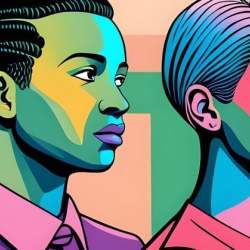
How AI Art Tools Are Expanding Queer Storytelling Online

Queer storytelling has never really waited for permission. Long before studios, publishers, or platforms cared about representation, queer people were already telling stories wherever they could. Message boards. Fan fiction archives. Personal blogs that barely survived a year. The internet made space where none existed before.
What’s changing now isn’t the impulse to tell these stories. It’s the tools people are using to shape them.
AI art tools have quietly slipped into queer creative spaces, not as replacements for imagination, but as something closer to a sketchbook that never runs out of pages. For a lot of creators, these tools aren’t about efficiency. They’re about getting unstuck.
Why Queer Stories Rarely Follow Straight Lines
Queer stories often don’t have neat beginnings or clean endings. They pause, loop, contradict themselves, then change direction entirely. That’s not a flaw. It’s how lived experience works when identity, desire, and self-understanding don’t arrive all at once.
Because of this, queer creators have always gravitated toward formats that allow flexibility. Visual art. Symbolic characters. Worlds that don’t need explaining. AI image tools fit into this tradition surprisingly well.
Instead of forcing a story into words too early, a creator can start with a feeling. A color. A body shape that doesn’t exist in real life. A scene that feels right even if it doesn’t make sense yet.
Sometimes that first image is all a story needs to begin.
AI as a Spark, Not a Shortcut
There’s a lot of noise online about AI “replacing” creativity, but that’s not how most queer creators actually use it. In practice, AI images are rarely final products. They’re rough drafts. Visual notes. Starting points.
Platforms associated with Ai Hentai often come into play here, not as literal depictions, but as idea generators. A fictional character appears. A setting suggests a mood. Suddenly, there’s something to respond to. Write from. Build on.
For creators who freeze at blank screens or feel locked out of traditional art spaces, that first spark matters. It turns “I have an idea” into “I have something to work with.”
Why Fictional Characters Feel Safer
A big reason these tools resonate in queer spaces is distance. Fictional characters don’t carry the same risks as real representations. They don’t invite assumptions about someone’s body, life, or identity.
That separation creates breathing room.
Through fictional characters, queer creators can explore attraction, transformation, intimacy, or confusion without tying those themes directly to themselves. The story stays symbolic. The creator stays in control.
Spaces influenced by Ai Hentai culture tend to reinforce this fictional framing. Characters are imagined, not copied. They exist outside reality, which aligns with long-standing queer storytelling traditions built on metaphor rather than exposure.
Images That Say What Words Can’t
Not every story needs narration. Some feelings are easier to show than explain.
A posture can say uncertainty.
A non-human form can express alienation.
A surreal environment can hold longing without naming it.
AI-generated visuals give queer creators a way to communicate emotionally without having to translate everything into language first. For many people, that’s a relief. Especially when words feel heavy or inadequate.
It also changes who gets to participate. People who think visually but struggle with writing suddenly have a voice. Audiences who connect through feeling rather than explanation recognize themselves in the work.
Lower Barriers, Wider Participation
Traditional creative spaces can be expensive, intimidating, and gatekept. AI tools remove some of that friction. You don’t need formal training. You don’t need expensive software. You don’t need permission.
That matters in queer communities, where access to resources has never been equal. When the tools are easier to reach, more stories surface. Messy ones. Personal ones. Half-formed ones.
And that’s often where the most honest work lives.
Shared Worlds Instead of Finished Products
Queer storytelling online is rarely solitary. AI-generated characters and images are shared, reworked, and reimagined across communities. One image becomes a prompt.
Someone else adds a story. Another person draws fan art. The world expands.
Ownership doesn’t disappear. It evolves.
This collaborative approach feels familiar to anyone who’s watched queer culture survive through adaptation and shared creativity. Stories grow because people touch them, not because they’re locked behind perfection.
Why Process Matters More Than Polish
AI tools encourage play. If something doesn’t work, you try again. If an idea feels strange, you follow it anyway. That freedom makes storytelling less precious and more alive.
In queer spaces, where people are often pressured to explain or define themselves too clearly, that looseness matters. Stories don’t have to be finished to be real.
They don’t need approval to exist.
AI art tools support that mindset by keeping creation fluid instead of final.
Where This Is Heading
AI isn’t changing queer storytelling because it’s powerful. It’s changing it because it’s flexible. It adapts to stories that don’t want to settle yet. It gives form to ideas that are still in motion.
Queer creators have always found ways to speak before language caught up. Today, images are part of that language. Not as replacements for voice, but as companions to it.
And in that space between imagination and expression, new stories keep taking shape.
Click for more