The Issue of False DMCA Takedowns by Takedown.co
In the evolving digital landscape, copyright protection remains a vital component for creators and businesses alike.
However, misuse of the Digital Millennium Copyright Act (DMCA) by automated systems has sparked significant concerns. To us, one of the most prominent offenders in this regard is Takedown.co (also know as Takedown.Company), a company that provides DMCA takedown services but has been filing numerous false claims.
Automated Overreach: How Takedown.co Operates
Takedown.co employs an automated system to identify and file DMCA takedown notices. While automation can be an efficient way to address copyright violations at scale, Takedown.co’s system appears to be overly reliant on keyword-based detection rather than comprehensive content analysis. This approach often results in false positives, where legitimate content is flagged and removed due to superficial similarities in wording rather than any actual copyright infringement.
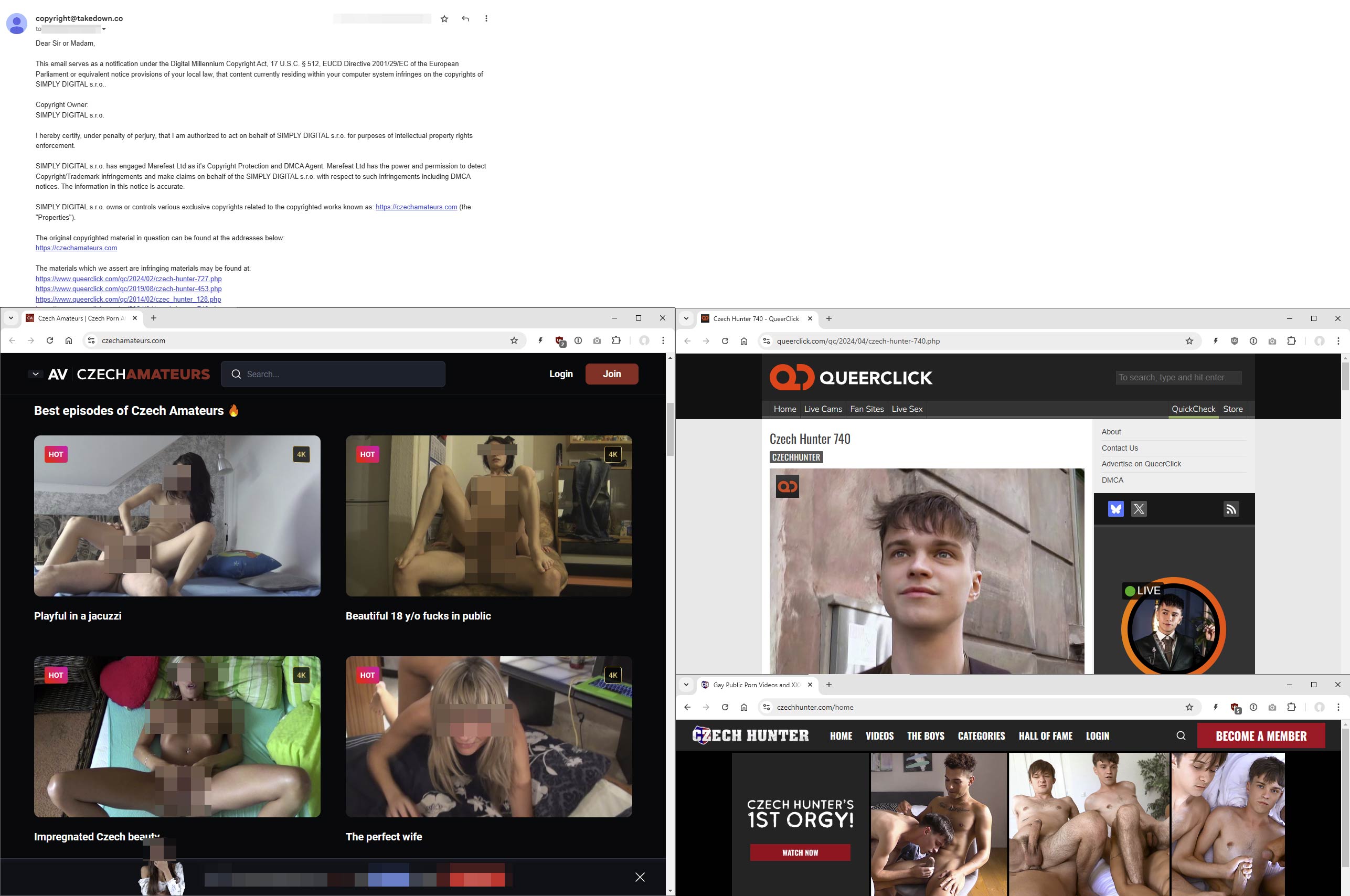
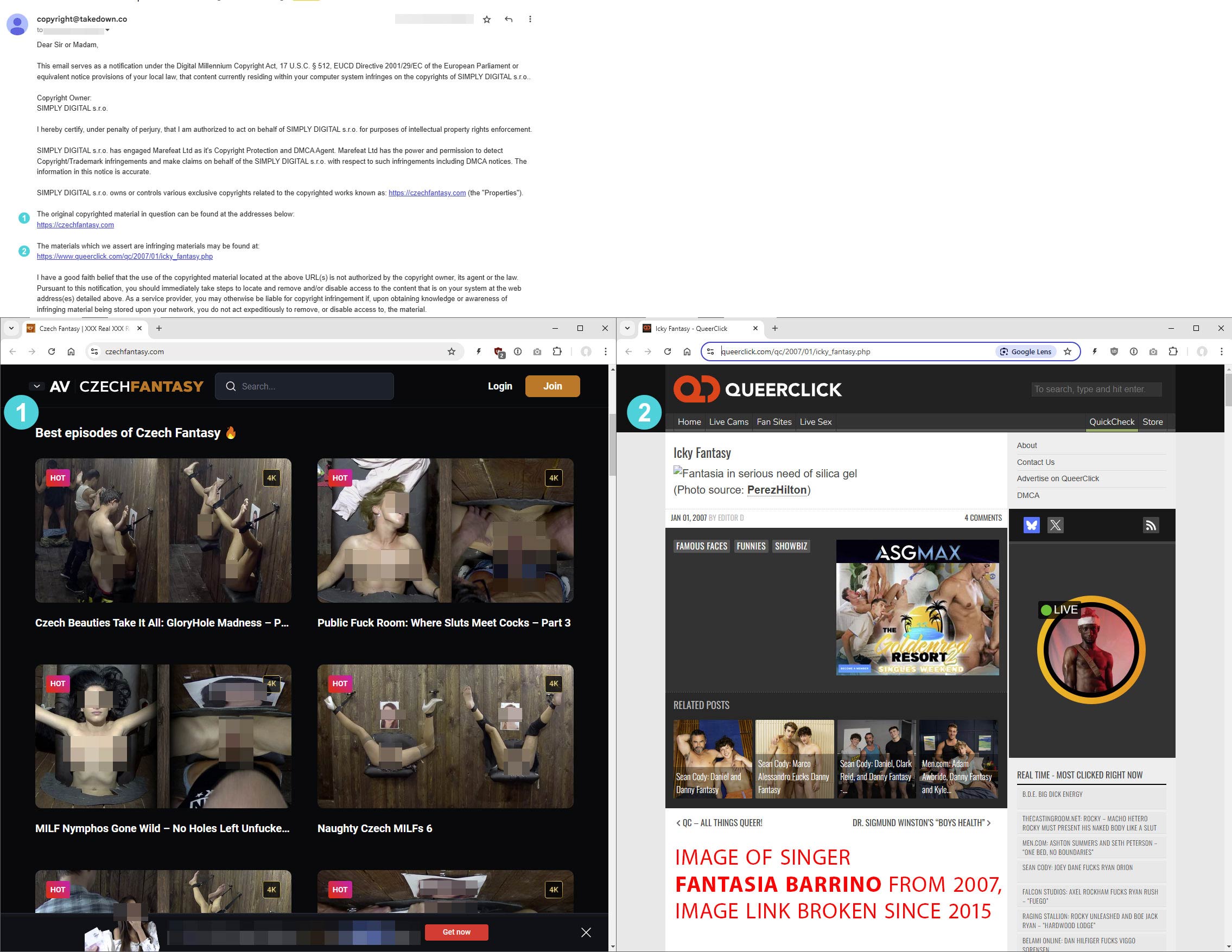
Adding to this issue, Takedown.co has repeatedly sent false DMCA claims against our content simply because the title of a post includes a word that matches the name of a studio, even when the actual content is entirely unrelated. As an official affiliate covering gay porn, our content has no connection to the straight porn referenced in their claims. These baseless notices highlight the recklessness of their keyword-driven approach and the harm it causes to legitimate creators.
DMCA on behalf of CzechAmateurs.com:
Legal Implications
Each time a DMCA notice is issued, the copyright claimant (and their authorized agent acting on their behalf) have to sign an oath that under the penalty of perjury, they certify that the information contained in the notification is both true and accurate. In order to do this, human intervention MUST be used to fact check and verify, BEFORE issuing the notice. All cases filed by Takedown.co at QueerClick have proved to be false but each case we have to respond to professionally and file a Counter Notification.
We would like to point out, that QueerClick strictly adhere to the DMCA act and fully support protection of copyright — we do not support piracy in any form. We will always vigorously defend our right to publish legitimate content on QueerClick, content that has the express permission granted from the studios, creators, submitters and genuine copyright holders alike.
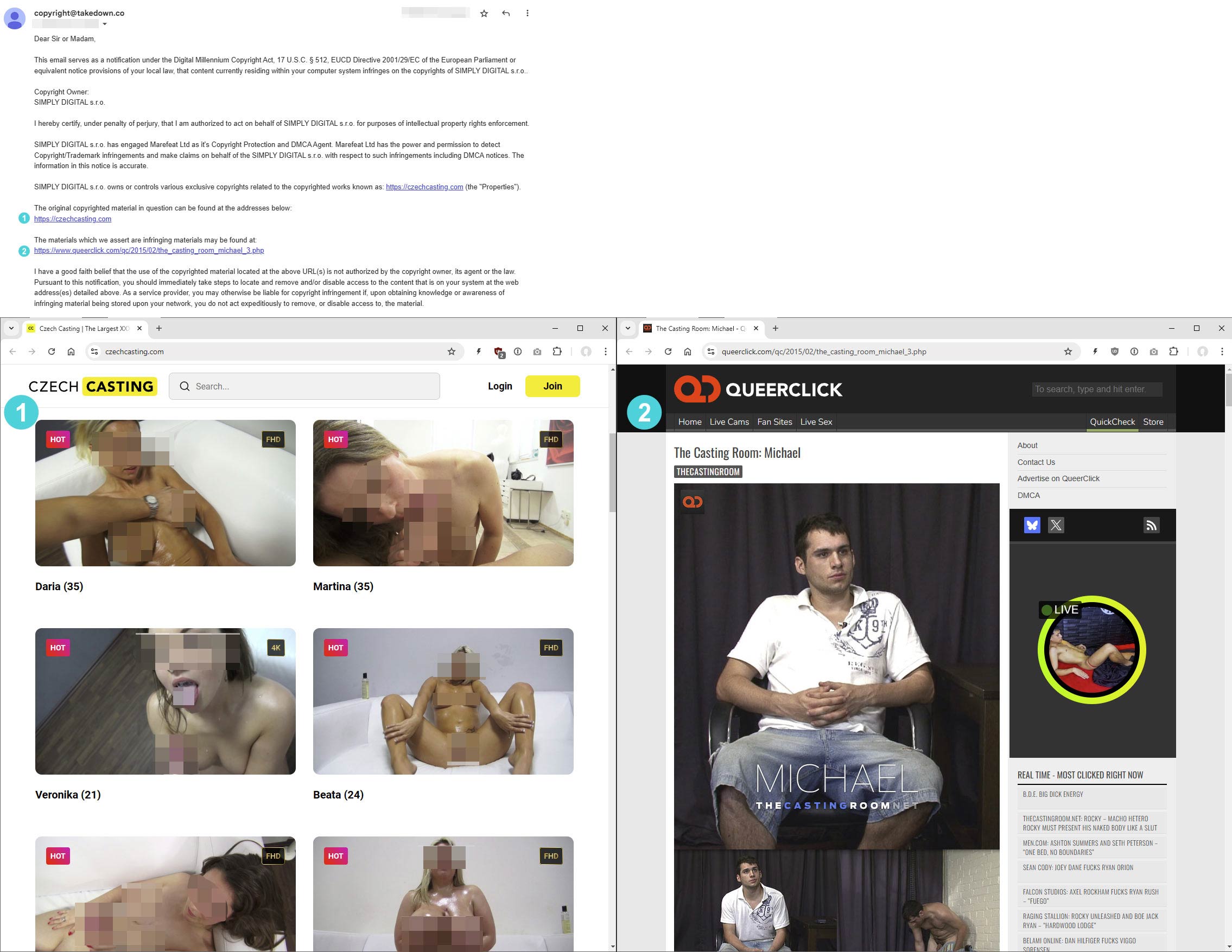
Some examples of the numerous false DMCAs received by Takedown.co:
DMCA on behalf of CzechCasting.com
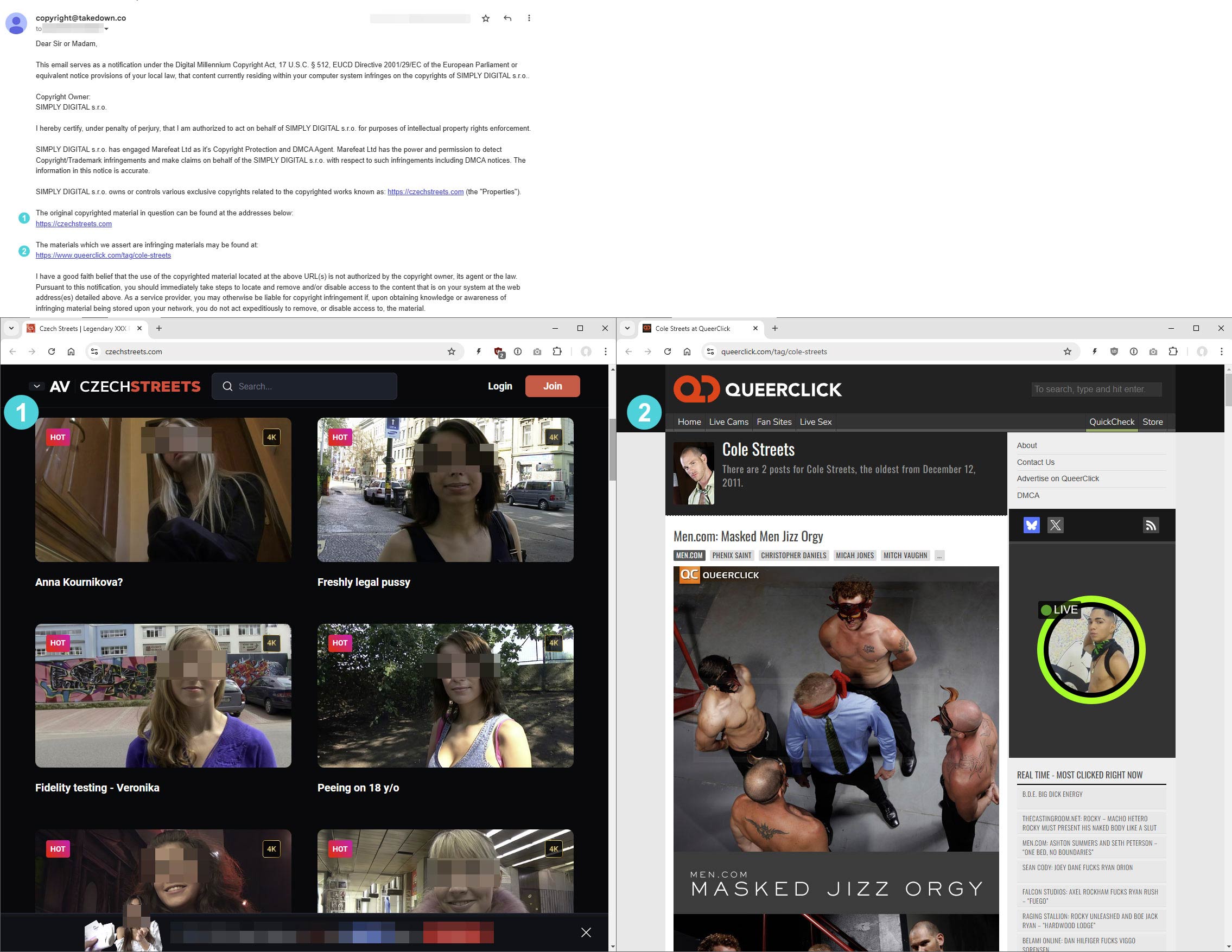
DMCA on behalf of CzechStreets.com:
DMCA on behalf of CzechFantasy.com:
The Need for Reform
The rise of false takedowns by companies like Takedown.co highlights the urgent need for reform in the DMCA process:
Human Oversight: Automated systems have to be supplemented with human review to ensure claims are accurate and contextually appropriate. After all, it is human’s submitting the DMCA notice and signing that their claim is true and legitimate. It is not an option to solely rely on a computer/automated system to deliver that.
Transparency: Takedown notices should include detailed explanations of the alleged infringement, allowing creators to better understand and address their claims. It cannot be based simply on textual context of images, a description of an image does not give copyright to any individual.
Penalties for Abuse: Companies filing false or frivolous takedowns should face penalties that are written into the DMCA act and to deter misuse. The law has the provision so that a false claimant can be sued for misrepresentation and damages.
Improved Dispute Mechanisms: Platforms should streamline the process for contesting false claims, ensuring creators can quickly restore their content. The current system is on the onus of the publisher to prove the claimant is wrong, during this time they are expected to remove/block the content, file a counter notice and then wait for 10 business days during which time, if the claimant does not counter sue the images can then be re-published. This needs to be changed and allow the content to remain published until the claimant can prove they actually own copyright.
Conclusion
While protecting intellectual property is crucial, it must not come at the expense of stifling legitimate content. The DMCA act, amongst other things, was also created to help protect copyright on the internet, but this act was written and passed in 1998. After more than a quarter of a century, this act needs to be reviewed and updated. We at QueerClick would welcome and support a review of the act, especially if this prevents companies misusing it on a daily basis.
Takedown.co’s reliance on flawed automated systems has led to abuse of the DMCA process, harming unrelated parties and undermining confidence in copyright enforcement mechanisms.
In light of these issues, we recommend that individuals and companies carefully consider their options when choosing a provider for DMCA services. It may be prudent to seek out reviews and experiences from other users to ensure that any chosen provider aligns with your needs for accuracy and accountability.
We should stress here, that each DMCA claim is a legal notice where the claimant is signing, upon perjury of oath, that they own the images and the location of where each image has been taken from. If this statement is untrue they will be liable for suing and damages.
Disclaimer: We have made multiple attempts to reach out to Takedown.co via email to address these concerns, but we have not received any response.